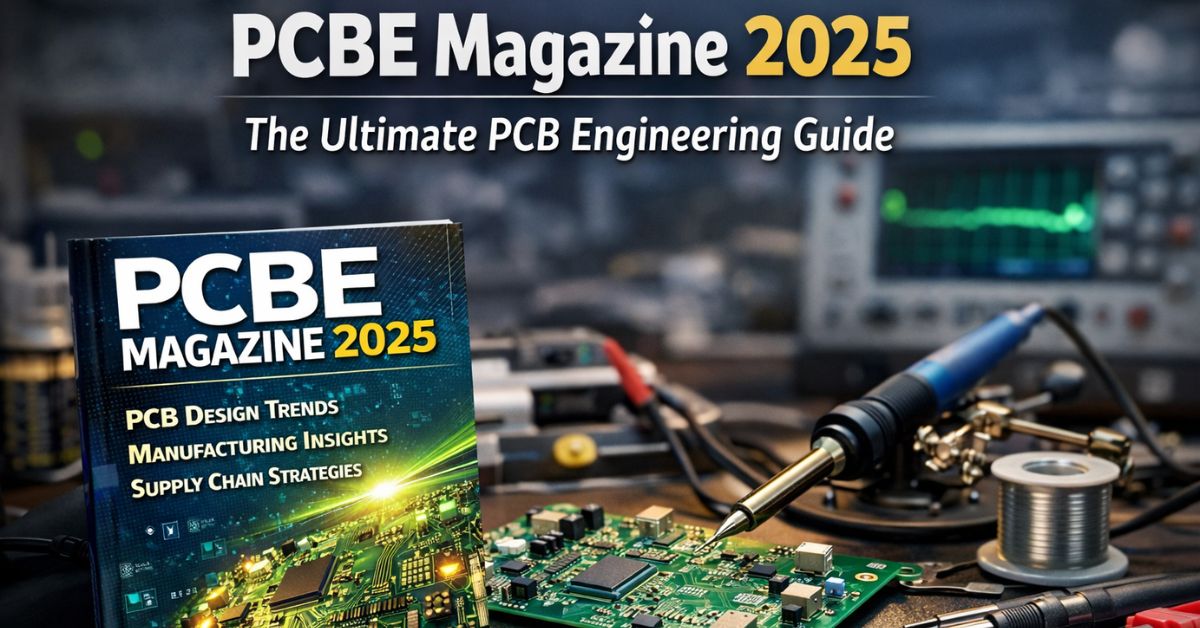
The search for reliable information in printed circuit board engineering is more demanding than ever. As new fabrication standards, AI-driven automation, and global supply chain shifts reshape the industry, professionals keep turning to resources that offer clarity instead of noise. Pcbe magazine stands out as one of the most referenced publications in PCB manufacturing, CAD design workflows, component sourcing, and next-generation board engineering.
Understanding its relevance in 2025 means knowing what it offers, who it helps, and how it aligns with today’s practical challenges.
What Is pcbe magazine in 2025?
In 2025, pcbe magazine is known as a dedicated print and digital publication focused on printed circuit board engineering and manufacturing. It attracts PCB designers, fabrication specialists, procurement managers, and electronics engineers looking for curated updates that aren’t recycled from press releases. The publication emphasizes practical knowledge: case studies, engineering breakdowns, material performance comparisons, CAD workflow improvements, troubleshooting strategies, and supply chain insights. Instead of focusing only on theoretical research, pcbe magazine highlights how decisions get made in real production environments.
Readers benefit from articles that include updated IPC standard guidance, cost-efficiency strategies for batch manufacturing, vendor comparison methodologies, and testing checklists for avoiding board failures. For those who prefer structured learning, the magazine also features step-by-step tutorials from engineers who have shipped products, not just consulted. Unlike fragmented blogs or keyword-stuffed content farms, pcbe magazine is edited with a clear editorial stance on evidence-based reporting. This has made it especially valuable for professionals adapting to post-2024 regulatory changes and updated board material sustainability policies.
Why pcbe magazine Matters for PCB Professionals
Many engineers dismiss traditional magazines because they assume online content replaces them. That assumption overlooks the fact that most search-driven content is optimized for traffic, not precision. pcbe magazine matters because it filters information before publishing. Instead of chasing trends, the editors consider what affects a fabrication line, a prototyping budget, a CAD software learning curve, and a testing schedule.
The publication has become especially important as companies introduce new materials that interact differently with multilayer trace configurations. Engineers appreciate the magazine’s resistance to marketing hype. When a new dielectric substrate claims better signal integrity, the publication tests or references external testing before presenting claims. This reduces misinformation and helps professionals avoid costly trial and error. Its audience also values vendor accountability. Articles identify potential risks in sourcing from suppliers where geopolitical tension or inconsistent QA procedures could disrupt production.
In a climate where AI-generated articles sometimes misinterpret engineering terms, pcbe magazine’s fact-checking process shields readers from mistakes that could compromise product safety or certification.
Who Reads pcbe magazine?
The readership includes more than electrical engineers. Organizations use the publication across departments because PCB decisions affect multiple layers of development. The core audiences include:
- PCB designers using CAD tools like Eagle, Altium, KiCad, or OrCAD
- Manufacturing engineers preparing boards for prototyping or mass production
- Industrial designers coordinating board layouts with enclosure tolerances
- Procurement teams tracking sourcing volatility and vendor reliability
- Quality assurance departments evaluating defects and testing standards
The magazine serves entry-level technicians who need foundational knowledge and senior engineers seeking emerging solutions. Students use the magazine to understand terminology before entering the field. Consultants read it to validate claims in proposal materials before advising clients. In workplaces where cross-discipline communication breaks down, a shared resource like pcbe magazine reduces misalignment. Everyone reads the same information, so decisions become easier to justify with evidence and shared vocabulary.
Core Topics Covered in pcbe magazine
While issues vary, recurring categories help readers form realistic expectations:
- CAD design pattern updates
- Layer stackup strategies
- Controlled impedance routing
- Thermal management and heat dissipation
- Low-noise power delivery networks
- Material comparisons (FR-4, Rogers, PTFE, ceramic)
- Lead times, supply chain contingencies, and vendor scoring
- Inspection systems: AOI, AXI, optical microscopy standards
Articles often lean into real examples rather than hypothetical charts. For instance, power integrity articles examine ripple indicators with real measurements, not generic theory. Fabrication-focused pieces analyze how a small deviation during surface finish selection changes corrosion resistance or solder wetting. These practical anchors reduce confusion for readers interpreting high-level documentation from component manufacturers.
How pcbe magazine Stays Credible in 2025
Credibility comes from consistent editorial enforcement. Unlike publications that accept any guest post, pcbe magazine screens contributors based on demonstrable experience. Pieces often include author credentials so readers can evaluate context. Claims referencing materials, performance metrics, or regulatory standards are tied to traceable documentation instead of anonymous commentary.
The publication also consulted external experts during the transition to RoHS3 and updated UL flammability requirements. By doing so, it avoided prematurely recommending materials that later proved noncompliant. Another element of credibility comes from transparency when data is incomplete. Instead of presenting speculation as fact, articles mark uncertain topics as developing areas. This practice is important for professionals who need to justify decisions to regulatory bodies or budget committees.
Pros and Cons of pcbe magazine
| Pros | Cons |
|---|---|
| Credible, well-curated information | Print issues may feel slow for fast updates |
| Practical engineering use cases | Some material assumes prior PCB knowledge |
| Focus on vendor reliability and sourcing | Limited hobbyist-oriented content |
| Tutorials from working engineers | Not always beginner-budget friendly |
The strengths of pcbe magazine come from its selective nature. It doesn’t try to satisfy every interest group. As a result, professionals benefit. However, this same approach makes casual readers feel excluded. Beginners may find some diagrams difficult without supplemental learning.
Its cautious stance toward emerging technologies slows adoption. While this protects users from hype cycles, engineers working in cutting-edge fields may want speedier insights through other sources. The key is to treat pcbe magazine as a reference guide, not the only source.
Digital vs Print Access: Which Format Works Better?
Digital access is responsive and searchable. For readers comparing dielectric constants or copper weights, search functions reduce time wasted flipping through sections. Print readers, however, argue that physical copies encourage deeper reading. Engineers working in clean rooms or testing labs sometimes prefer print because it reduces the risk of contamination from mobile devices.
The best format depends on workflow. Teams using pcbe magazine as a training resource may benefit from digital licenses. Teams using it for vendor accountability might prefer print copies to annotate, archive, and reference during audits.
How pcbe magazine Supports 2025 Engineering Trends
2025 isn’t defined by futuristic breakthroughs; it’s defined by making technology sustainable and reliable. pcbe magazine’s editorial focus reflects this by highlighting long-term maintainability. Topics like predictable lead time planning, modular redesign strategies, and recycling-friendly board compositions align with current procurement priorities.
The publication also explores AI-driven routing tools, not as a novelty, but as a question: when does automation fail? Several pieces focus on verifying AI-generated routing suggestions to avoid design rule violations. Engineers can use this to build hybrid workflows rather than blindly adopting automation.
Pricing and Accessibility
Access models vary. Print subscriptions cost more due to logistics and material. Digital plans are usually more affordable, especially for companies purchasing team licenses. Occasional promotional access appears during trade shows. Students receive discounts through participating universities.
The pricing feels aligned with the value of information. However, individual hobbyists or freelancers may hesitate. The ideal reader is someone making decisions where mistakes cost more than the subscription. Comparing $10-k board rework costs to subscription fees frames the value clearly.
How to Use pcbe magazine for Skill Development
Treat pcbe magazine like a training companion. Instead of reading passively, approach articles with these habits:
- Annotate unfamiliar terminology
- Compare design suggestions to your current processes
- Test a single recommendation per prototype cycle
- Evaluate author assumptions against your application
- Clip vendor comparison charts for procurement meetings
Some articles include step-by-step segments. Use them as worksheets. Build your own checklists from those suggestions to adapt to your environment. Experienced engineers use pcbe magazine for audits: verifying their routing, material selection, and inspection parameters.
Risk: When pcbe magazine May Not Be Enough
Relying on a single source creates blind spots. pcbe magazine can’t replace regulatory bodies or certified training. Readers should treat it as a supplementary resource. When working with medical, aerospace, or defense electronics, local compliance takes precedence. The magazine offers informed guidance, not legal confirmation.
Another limitation comes from regional market differences. Supply chain advice for the United States may not translate to Asia or EU markets. Readers working globally should cross-check sourcing recommendations with geographic risk databases and standards like ITAR.
Practical Example: Vendor Scoring Based on Magazine Advice
An engineer evaluating two suppliers for a 14-layer PCB used pcbe magazine’s vendor checklist structure. Instead of basing decision on price alone, the scoring included delivery consistency, defect resolution timelines, and traceability documentation. This helped clarify which vendor created less long-term risk. The company selected the more expensive vendor initially but reduced failure rates enough to offset cost increases. This illustrates how the magazine’s editorial stance informs decision-making without dictating a single answer.
Internal Link Example for Natural Placement
A recent breakdown of board selection strategies on USMAGAZINEBLOG shows how businesses can apply structured content models to streamline electronics sourcing and documentation. Readers can pair that guide with pcbe magazine articles for a balanced approach.
Key Takeaways
- pcbe magazine provides curated PCB engineering content for real manufacturing conditions
- It supports 2025 challenges: compliance, sourcing, and automated design tools
- Best for professionals making cost-impacting decisions
- Not ideal as the only reference source
- Works well when paired with structured internal knowledge systems
Conclusion
In 2025, pcbe magazine remains a respected publication because it acknowledges engineering reality. It avoids sensational predictions. Instead, it clarifies how to navigate constraints: supply limits, compliance rules, design tool limitations, and cost pressure. Professionals can apply its insights to reduce waste and improve board reliability. It’s not perfect, and it shouldn’t be adopted uncritically. Its value grows when readers treat it as one resource within a larger verification process.
For PCB engineers in the United States preparing for long-term industry shifts, pcbe magazine offers grounded direction and consistent, traceable guidance.
FAQs
Is pcbe magazine beginner-friendly?
It’s readable for beginners with supplemental learning.
Does it include CAD templates?
Sometimes, depending on the issue.
Can small businesses benefit?
Yes, especially for vendor evaluation and QA planning.
Does the magazine offer certifications?
No, but it sometimes references training programs.
Are digital archives searchable?
Yes, most subscription tiers include search access.