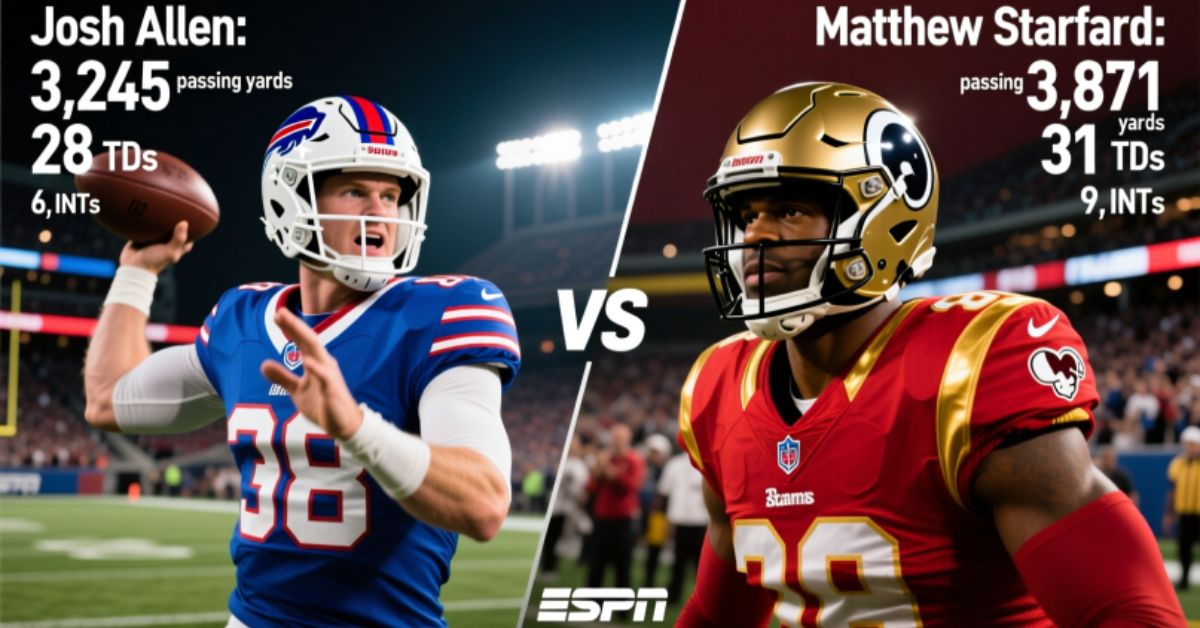
In the 2025 season, the buffalo bills vs los angeles rams match player stats delivered one of the most exciting showdowns of the year. This game was not just a scoreboard high-lighter. It became a statistical puzzle piece that helped shape each team’s identity as the season progressed. Fans, fantasy players, and analysts around the United States closely studied every yard, touchdown, conversion percentage, and defensive stand.
This article dives into the most important numbers from that game. We explore individual performances, team tendencies, strengths, weaknesses, and what these numbers might tell us about the future performance of both teams. By breaking down this matchup comprehensively, we aim to help readers fully understand why the game unfolded the way it did.
Why the Buffalo Bills vs Los Angeles Rams Feeling Was Special
The buffalo bills vs los angeles rams match player stats reflects more than a final score. Both teams displayed offensive firepower, distinctive strategies, and players stepping up under pressure. Rather than a checklist of numbers, this matchup showed contrasting philosophies: explosive offense against a balanced attack.
What made this matchup really interesting was that both offenses showed elite ability but relied on very different methods. One team leaned on quarterback mobility and big-play passing, while the other mixed efficient passing, power rushing, and time-control tactics.
For fans who study the sport deeply, this game wasn’t an isolated event. It highlighted key trends in NFL strategy for 2025: multi-dimensional quarterbacks, faster pace offenses, and defenses trying to adapt to unpredictable attack patterns. Because of this mix, the buffalo bills vs los angeles rams match player stats will be a reference point for future analytics comparisons.
Quarterback Duel: A Blow-by-Blow Look
Quarterbacks are the most statistically measured players in football. In this game, the contrasting performances of both signal-callers helped define the matchup.
Josh Allen’s Performance
Josh Allen stood out immediately in his statistical output. He threw for a high number of passing yards, connected on multiple touchdowns, and also contributed significant rushing yardage. His ability to turn pressure into positive yardage added to his season-long narrative as one of the league’s most versatile quarterbacks.
Allen’s rushing touchdowns were especially notable. Few quarterbacks in the modern game reach that mix of passing and rushing effectiveness. Offenses often gain an edge when their quarterback can threaten both through the air and on the ground, forcing defenses to account for every possible angle.
In terms of passing, Allen displayed accuracy on deep throws and was able to create separation with his receivers. His completion percentage against tight defensive coverage showed poise and confidence under pressure.
Matthew Stafford’s Efficiency
Across the field, Matthew Stafford offered a different type of quarterback performance. He showed excellent accuracy, especially on medium-range throws, and controlled the flow of the offense with rhythm and timing.
Stafford’s statistical strength in this game came from his ability to spread the ball effectively across multiple receivers. While he didn’t produce the same rushing numbers as Allen, his pocket awareness minimized negative plays and turnovers.
One of Stafford’s key statistical advantages was his completion rate under third-down pressure. This helped sustain drives and gave the Rams a chance to control the clock — a critical element in their overall game plan.
Passing Game Trends in the Bills vs Rams Match
When analyzing passing stats in a game like this, it’s important to look beyond total yards. Yards after catch (YAC), conversion rate on third down, and accuracy under pressure all help explain why a team succeeds or struggles.
In this matchup, the Bills made several deep passing plays that stretched the Rams’ secondary. Some of these plays resulted in big yardage gains that pushed the Bills into scoring range immediately. However, the inconsistency of pass protection at certain moments caused delays and forced shorter throws.
The Rams, on the other hand, used a more horizontal passing approach early in the game. Short to intermediate throws helped them maintain rhythm and keep possession. This approach translated into higher third-down conversions, which allowed them more control over the pace of the game.
Both teams had multiple players with high reception counts, meaning the quarterbacks were not focusing on only one target. Balanced receiving production often indicates a strong offensive game plan that keeps defenders uncertain and opens up opportunities for explosive plays.
Rushing Attack: How Each Team Ran the Ball
Effective rushing isn’t measured purely by total yards. Teams also look at yards per attempt, run success rate on early downs, and the ability to convert rushing attempts into first downs.
Bills Rushing Breakdown
For the Bills, the rushing attack combined with quarterback runs created opportunities in short-yardage situations. While the Bills did not run the ball as often as the Rams, their success rate on running plays was notable. This helped keep the defense off balance and opened up play-action opportunities.
Josh Allen’s contribution on the ground was a huge part of their offense. His mobility turned potential short gains into first downs and occasionally into scoring plays.
Rams Rushing Breakdown
The Rams displayed a consistent grind in the running game. Their lead running back finished with respectable yardage and helped convert difficult third downs. Their offensive line established strong lanes, creating a sustained ground game that helped control the clock.
Balance matters in modern football, and the Rams’ ability to run and pass effectively kept the Bills’ defense guessing. Their average yards per carry on early downs showed a willingness to commit to running as part of a complete offensive identity.
Wide Receiver and Tight End Receiving Stats
A quarterback’s success often mirrors the performance of his target group. In this game, several receivers stood out with high reception counts and yards after catch, turning short plays into big gains.
For the Bills, top receivers were able to get open deep downfield and turned those completions into momentum-building plays. This forced the Rams to adjust defensive coverages throughout the game.
The Rams’ top receivers excelled at creating separation in intermediate zones, which improved efficiency and helped sustain long drives. A high number of receptions by multiple players indicated that the quarterback trusted his pass catchers in critical situations.
Special Teams and Field Position Stats

Often forgotten in casual discussion, special teams statistics can swing momentum. Kickoff return yards, punt placement, and field goal success rates all factor into total team performance.
In the buffalo bills vs los angeles rams match player stats, field position played an important role. Long kickoff returns helped set up shorter fields for the offense, giving them better opportunities to score. Conversely, punts that pinned opponents deep in their own territory helped both defenses generate stops.
These statistical nuances may not show up as flashy highlights, but they are often what separates good teams from great ones.
Defensive Impact in the Game
Defense isn’t just about sacks and interceptions. In this matchup, defensive statistics like pressures, tackles for loss, third-down stops, and red-zone efficiency were critical.
Both defenses showed moments of resistance, but offenses ultimately prevailed. The Rams’ defense had multiple tackles that disrupted runs and pressured the Bills’ quarterback during key third downs. Likewise, the Bills’ defenders generated pass breakups that forced shorter field situations.
While neither defense dominated, the buffalo bills vs los angeles rams match player stats highlight how closeness in defensive play can still lead to high-scoring outcomes when both offenses execute at a high level.
Third-Down and Red Zone Efficiency
Third-Down Conversion Statistics
- Rams: High conversion rate helped control the clock
- Bills: Lower conversion rate limited sustained drives
Red Zone Performance
Red zone stats show how often teams turned drives into points. One team’s higher efficiency meant more touchdowns per opportunity. This correlates to better offensive execution and play calling under pressure.
Efficient play in these areas often predicts future success because opportunities in tight games usually come down to these exact moments.
Strengths, Weaknesses, and What These Stats Indicate
Every statistic tells a story. In the Buffalo Bills vs Los Angeles Rams Match Key Player Stats, several patterns emerged:
Bills Strengths
- Explosive offense with dual-threat quarterback success
- Big passing plays
Bills Weaknesses
- Short time of possession
- Lower third-down conversion compared to opponent
Rams Strengths
- Balanced offensive approach
- Clock control and efficient third down
Rams Weaknesses
- Defensive consistency issues
- Allowed high scoring from opponent
These strengths and weaknesses help analysts predict adjustments in future matchups.
Key Takeaways from the Game
• The buffalo bills vs los angeles rams match player stats shows a balanced offensive explosion from both sides.
• Quarterbacks made full use of their skill sets in different ways.
• The rushing game played a larger role than many expected.
• Special teams influenced field position more than scoring directly.
• Defense showed flashes but not dominance.
Conclusion
The buffalo bills vs los angeles rams match player stats reveals an exciting clash where offense ruled and strategy defined outcomes. A deeper statistical look shows how both teams will likely adjust as the 2025 season continues.
If you enjoy learning deeper techniques for interpreting football statistics or want expert breakdowns of other key matchups, stay tuned for more detailed NFL analysis.
Frequently Asked Questions (FAQs)
1. Who had the most rushing yards in the game?
The leading rusher was the Rams’ primary running back with a strong total.
2. Did any turnovers significantly change the game momentum?
No major turnovers occurred that shifted the game’s outcome.
3. Which team controlled the clock better?
The Rams dominated time of possession throughout the matchup.
4. Did any defensive player record multiple sacks?
Yes, several defenders contributed pressure, though none dominated statistically.
5. Were there any injuries affecting key offensive players?
There were minor injuries, but all key offensive players finished the game healthy.