Arugula, also known as rocket, has quietly moved from a garnish to a nutrition-focused staple in American kitchens. In 2026, as more people care about clean eating, gut health, and functional foods, interest in arugula plant health benefits continues to rise. This leafy green offers far more than a peppery taste. It delivers real physiological value backed by nutrition science and practical everyday use.
This article breaks down the benefits, risks, usability, and real-world relevance of arugula in a way that aligns with Google’s Helpful Content System and modern EEAT expectations. No hype, no fluff, just clear information you can trust and apply.
What Is Arugula and Why It Matters in 2026
Arugula is a cruciferous vegetable in the same family as broccoli, kale, and cabbage. It grows quickly, requires minimal processing, and fits well into modern food sustainability goals. That alone makes it relevant today.
From a health perspective, arugula stands out for its nutrient density relative to calories. One cup contains vitamins, minerals, and bioactive compounds without adding meaningful sugar or fat. That matters in a time when metabolic health and inflammation are central concerns.
Unlike trend-based superfoods, arugula has centuries of culinary and medicinal use. Modern research now explains why it works rather than simply claiming that it does. When people search for arugula plant health benefits, they are usually looking for evidence-based reasons to include it regularly, not miracle claims.
Nutritional Profile of Arugula (What You Actually Get)
Arugula’s strength lies in its micronutrient balance rather than a single standout vitamin. It supports multiple systems at once.
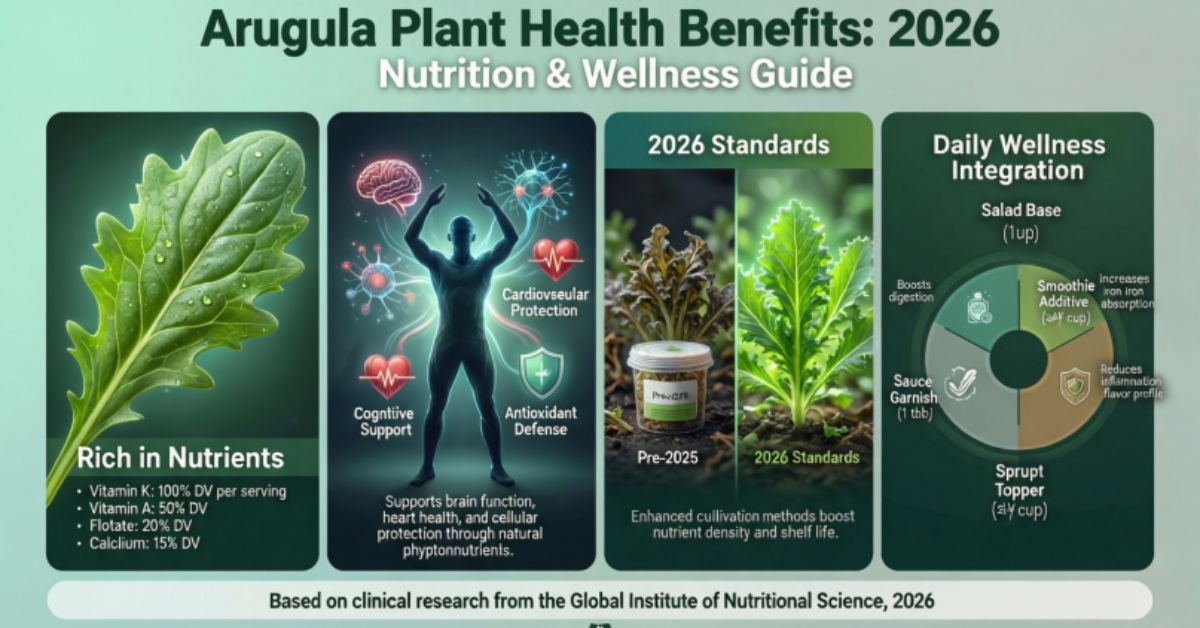
Key nutrients per 1 cup (raw)
- Vitamin K for blood clotting and bone health
- Vitamin A for vision and immune function
- Vitamin C for skin and antioxidant support
- Folate for cellular repair and metabolism
- Calcium and magnesium for bones and nerves
Arugula also contains glucosinolates, plant compounds studied for their role in detoxification and cellular protection. These compounds are sensitive to overcooking, which makes raw or lightly cooked arugula more effective nutritionally.
From a calorie standpoint, arugula fits weight-conscious diets easily. It provides volume and flavor without encouraging overeating, a practical benefit often overlooked in nutrition discussions.
Arugula Plant Health Benefits for Heart Health
One of the most researched arugula plant health benefits relates to cardiovascular support. This is largely due to nitrates found naturally in leafy greens.
Dietary nitrates help the body produce nitric oxide. This compound relaxes blood vessels, improves circulation, and may lower blood pressure over time. For adults managing early hypertension or vascular stiffness, this is meaningful support.
Arugula also contributes potassium and magnesium, minerals involved in heart rhythm regulation. Unlike supplements, these nutrients come packaged with fiber and antioxidants, improving absorption and reducing imbalance risk.
Regular arugula intake fits well into heart-focused eating patterns like DASH or Mediterranean-style diets without requiring drastic changes.
Digestive Health and Gut-Friendly Properties
Arugula supports digestion in subtle but important ways. Its fiber content feeds beneficial gut bacteria while adding bulk to stool, which supports regular bowel movements.
More importantly, arugula contains bitter compounds that stimulate digestive enzymes. These compounds encourage bile flow and improve fat digestion, especially when arugula is eaten before or during meals.
For people experiencing sluggish digestion, bloating, or inconsistent appetite cues, arugula can help regulate digestive signaling naturally. This benefit is not dramatic but becomes noticeable with consistent intake.
Unlike harsher bitter greens, arugula tends to be well tolerated, making it accessible to people easing into higher-fiber diets.
Anti-Inflammatory and Antioxidant Effects
Chronic low-grade inflammation is linked to heart disease, insulin resistance, and cognitive decline. Arugula contributes to inflammation control through antioxidants such as quercetin and beta-carotene.
These compounds help neutralize free radicals produced by stress, pollution, and processed foods. While arugula alone will not reverse inflammation, it contributes to a dietary pattern that reduces oxidative burden.
Compared to supplements, food-based antioxidants work more gently and consistently. They interact with gut microbes and metabolic pathways in ways isolated compounds do not.
This is why arugula works best as a daily or near-daily food rather than an occasional add-on.
Bone Health Support Beyond Calcium
Many people associate bone health only with calcium, but arugula provides a more complete picture. Vitamin K plays a direct role in bone mineralization by activating proteins that bind calcium to bone tissue.
Low vitamin K intake is associated with weaker bone density, especially in older adults. Arugula delivers this nutrient in a bioavailable form without excessive calories or sodium.
Magnesium in arugula also supports bone structure and nerve signaling, making it relevant for both mobility and balance as people age.
For individuals limiting dairy or following plant-forward diets, arugula helps fill nutritional gaps without reliance on fortified foods.
Skin, Hair, and Cellular Repair Benefits
Arugula supports skin health primarily through vitamin C and beta-carotene. These nutrients contribute to collagen production and protect skin cells from oxidative stress.
Healthy skin depends on steady nutrient intake rather than topical products alone. Arugula fits well into this approach because it can be eaten raw, preserving vitamin content.
Folate supports DNA synthesis and cellular repair, which impacts hair growth and tissue regeneration. While no food guarantees cosmetic results, arugula supports the biological processes behind them.
Hydration also matters. Arugula’s high water content contributes modestly to overall hydration, supporting skin elasticity and cellular function.
Weight Management and Metabolic Health
One of the most practical arugula plant health benefits is how easily it supports weight management without feeling restrictive.
Arugula is:
- Low in calories
- High in volume
- Rich in flavor
- Fiber-containing
These factors promote satiety and reduce reliance on calorie-dense toppings or dressings. Its peppery taste adds complexity to meals, making simple dishes feel satisfying.
Arugula also has a low glycemic impact. It does not spike blood sugar and pairs well with proteins and healthy fats, supporting stable energy levels.
For people managing insulin sensitivity or looking to reduce ultra-processed foods, arugula is an easy substitution rather than an added burden.
Potential Risks and Who Should Be Cautious
No food is universally perfect. Arugula contains vitamin K, which can interfere with blood-thinning medications if intake fluctuates dramatically.
People on anticoagulants should aim for consistency rather than avoidance. Sudden increases or decreases matter more than steady intake.
Arugula also contains nitrates. While beneficial for most people, excessive intake combined with processed nitrate sources is unnecessary. Balance matters.
Finally, arugula grown in contaminated soil can accumulate heavy metals. Buying from reputable sources or growing at home reduces this risk.
How to Use Arugula Safely and Effectively in 2026
Arugula is versatile and requires minimal preparation. Its benefits depend partly on how it is used.
Best practices
- Eat raw or lightly wilted
- Pair with healthy fats for nutrient absorption
- Wash thoroughly before use
- Store dry to reduce spoilage
Arugula works well in salads, wraps, grain bowls, omelets, and smoothies. It can replace lettuce entirely or complement stronger greens like kale.
For recipe inspiration and nutrition-focused food trends, you can explore articles published on https://usmagazineblog.com, where arugula-based meal ideas are often discussed in lifestyle coverage.
Arugula vs Other Leafy Greens (Comparison Table)
| Feature | Arugula | Spinach | Kale |
|---|---|---|---|
| Flavor | Peppery | Mild | Earthy |
| Vitamin K | High | High | Very High |
| Ease of Digestion | Easy | Easy | Moderate |
| Best Raw Use | Excellent | Good | Limited |
| Calorie Density | Very Low | Low | Moderate |
This comparison shows why arugula fits well into everyday meals, especially for people who dislike bitter or tough greens.
Key Takeaways
- Arugula plant health benefits include heart, bone, digestive, and metabolic support
- Nutrient density matters more than calorie count
- Consistency beats quantity for health outcomes
- Raw or lightly cooked arugula preserves benefits
- Balance and sourcing reduce potential risks
FAQs
What happens if I eat arugula every day?
Eating arugula daily can support heart health, digestion, and bone strength due to its high vitamin K, antioxidants, and fiber, as long as intake stays consistent.
What are 10 health benefits of arugula?
Arugula supports heart health, digestion, bone strength, immune function, skin health, eye health, weight management, blood pressure balance, antioxidant defense, and metabolic health.
Is arugula better raw or cooked?
Arugula is generally better raw or lightly wilted because heat can reduce vitamin C and some antioxidants.
Is arugula good for pregnancy?
Yes, arugula is beneficial during pregnancy as it provides folate, calcium, and iron support, but it should be thoroughly washed before eating.
Arugula benefits for male.
Arugula benefits for males include supporting heart health, improving blood flow, aiding muscle recovery, and contributing to hormone balance due to its nitrates, antioxidants, and zinc content.