Clean drinking water is no longer something most Americans take for granted. Aging infrastructure, emerging contaminants, and climate pressure have pushed many households and facilities to explore advanced treatment options. One method gaining steady attention is magsorption water purification. This approach blends magnetic separation with adsorption science to remove harmful substances efficiently and with less chemical input. In 2026, it is being discussed not as a lab concept but as a practical solution for homes, industries, and emergency water treatment systems.
This guide explains how magsorption water purification works, where it performs best, and what limitations you should realistically expect. The goal is clarity, not hype, so you can decide whether this technology fits your needs.
What Is Magsorption Water Purification?
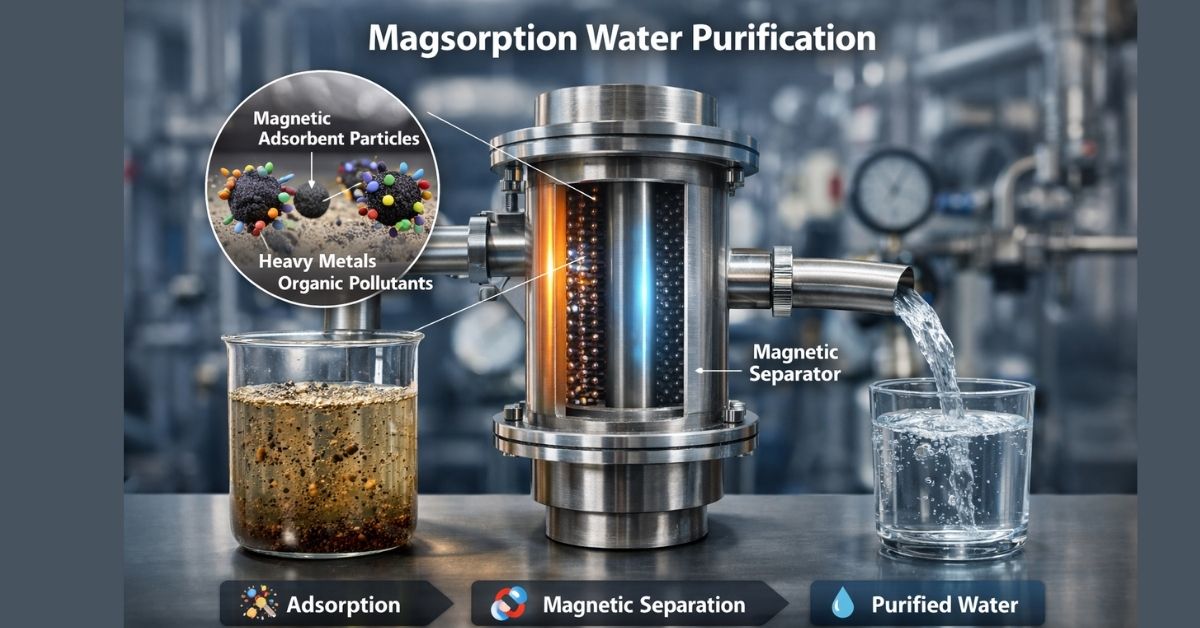
Magsorption water purification is a treatment method that combines magnetic particles with adsorptive materials to capture contaminants from water. Instead of relying only on filters or chemicals, this system uses specially engineered particles that bind pollutants and are then removed using magnetic force.
At its core, magsorption water purification works in three steps. First, magnetic adsorbent particles are introduced into contaminated water. Second, these particles attract and bind contaminants such as heavy metals, organic pollutants, or microplastics. Third, a magnetic field pulls the loaded particles out of the water, leaving cleaner water behind.
What makes this approach appealing in 2026 is control. Traditional filtration often struggles with very small or dissolved contaminants. Magsorption water purification targets those problem substances more precisely. Researchers and manufacturers in the US are refining particle coatings to focus on specific contaminants, such as PFAS or lead.
This technology is not magic. It does not purify every water source instantly. However, it represents a meaningful shift toward selective, reusable, and lower-waste purification systems that align with modern water safety standards.
How Magsorption Water Purification Works Step by Step
Understanding the mechanics of magsorption water purification helps separate real value from marketing claims. The system relies on adsorption, not absorption. That means contaminants stick to the surface of particles instead of being soaked in.
The particles used are usually iron-based or contain magnetic cores. Their surfaces are treated with materials designed to attract certain pollutants. When mixed into water, these particles move freely and interact with contaminants at a microscopic level.
Once adsorption occurs, a magnetic separator is applied. This can be as simple as a strong external magnet or as complex as an automated magnetic chamber in industrial systems. The contaminated particles are pulled out, and the clean water is collected.
Key functional elements involved
- Magnetic core particles for easy separation
- Adsorptive coatings tuned to specific pollutants
- A magnetic recovery system to remove used particles
In 2026, systems are increasingly automated and enclosed, reducing user exposure and error. This process minimizes chemical additives and lowers energy use compared to reverse osmosis or thermal methods. Still, proper system design matters. Poorly calibrated setups can leave residual particles or reduce effectiveness over time.
Types of Contaminants Removed by Magsorption Water Purification
One of the strongest advantages of magsorption water purification is flexibility. Different particle coatings can target different contaminants, making the system adaptable across use cases.
In the United States, common water concerns include heavy metals from old pipes, agricultural runoff, industrial solvents, and emerging contaminants like PFAS. Magsorption systems can be engineered to address many of these issues directly.
Common contaminants effectively addressed include:
- Lead, arsenic, and mercury
- Organic dyes and solvents
- Certain bacteria and pathogens when paired with disinfection
- Microplastics and suspended solids
Unlike standard carbon filters, magsorption water purification can be adjusted for regional water problems. That matters because US water quality varies widely by state and even by county. According to industry analysis shared by environmental engineers, this adaptability is one reason magsorption systems are being tested in municipal pilots and industrial wastewater treatment facilities.
It is important to note that no single system removes everything. Most real-world installations combine magsorption with filtration or UV treatment for comprehensive results.
Benefits of Magsorption Water Purification in 2026
The appeal of magsorption water purification goes beyond novelty. Its benefits align with modern water treatment goals such as efficiency, sustainability, and precision.
First, it reduces chemical dependency. Many traditional treatments rely on coagulants or disinfectants that leave residuals. Magsorption systems use physical separation, which lowers chemical waste and secondary pollution.
Second, the magnetic particles are often reusable. After contaminants are removed, particles can be cleaned and redeployed. This reduces long-term operating costs and material waste.
Third, magsorption water purification works faster than many passive filtration systems. Adsorption happens quickly due to high surface area contact. This makes it suitable for emergency response and portable water treatment units.
Additional advantages include:
- Lower energy consumption than reverse osmosis
- Targeted contaminant removal
- Scalability from small units to industrial systems
That said, these benefits depend heavily on proper maintenance and system design. Poor handling of magnetic particles can reduce performance and raise safety concerns.
Risks and Limitations You Should Understand
No water treatment technology is risk free, and magsorption water purification is no exception. Ignoring limitations is one reason Google devalues content that oversells solutions.
One concern is particle leakage. If magnetic separation is poorly controlled, trace particles may remain in treated water. Reputable systems include safeguards, but low-quality designs can pose risks.
Another limitation is cost. While operating costs can be low over time, initial setup can be higher than basic filtration. This makes magsorption water purification less accessible for some households.
There is also the issue of selectivity. Adsorptive coatings are designed for specific contaminants. If your water contains a mix of pollutants not covered by the particle design, effectiveness drops.
Key limitations to consider:
- Requires technical calibration
- Not a standalone solution for all contaminants
- Quality varies significantly by manufacturer
Understanding these tradeoffs helps you make informed decisions rather than chasing trends.
Magsorption Water Purification vs Traditional Methods
Comparing magsorption water purification to existing options clarifies where it fits best. Below is a simplified comparison for common US use cases.
| Method | Strengths | Weaknesses | Best Use Case |
|---|---|---|---|
| Magsorption water purification | Targeted removal, reusable media, fast | Higher setup cost, technical | Industrial, specialized home systems |
| Activated carbon | Affordable, simple | Limited contaminant range | Taste, odor, chlorine |
| Reverse osmosis | Broad removal | High water waste, energy | Drinking water purification |
| UV treatment | Effective disinfection | No chemical removal | Pathogen control |
Magsorption water purification stands out when precision matters. It is not meant to replace every system but to complement them where traditional methods fall short.
Real-World Use Cases in the United States
In 2026, magsorption water purification is no longer confined to research papers. Pilot programs and commercial deployments are expanding across the US.
Industrial wastewater treatment is one of the most common applications. Facilities dealing with metal contamination benefit from selective adsorption and magnetic recovery.
Emergency response units are another growing area. Portable magsorption systems can treat contaminated water quickly after floods or infrastructure failures.
Some advanced home systems now integrate magsorption as a pre-treatment stage. These setups are often discussed in environmental technology features on platforms like https://usmagazineblog.com/, where innovation meets practical analysis.
Municipal use remains limited but promising. Smaller towns facing specific contamination issues are testing magsorption as a targeted solution rather than a full system overhaul.
Maintenance, Safety, and Long-Term Usability
Long-term performance depends on responsible use. Magsorption water purification systems require monitoring, even if they are marketed as low maintenance.
Magnetic particles must be cleaned or replaced periodically. If adsorption sites become saturated, efficiency drops sharply. Most manufacturers provide guidelines based on water quality testing.
Safety protocols also matter. Handling magnetic particles requires sealed systems to prevent inhalation or environmental release. Certified systems address this, but DIY approaches are risky.
Usability in 2026 has improved thanks to automation. Sensors now track particle saturation and separation efficiency. This reduces user error and aligns with modern safety expectations.
If maintained correctly, magsorption water purification systems can operate reliably for years without significant performance loss.
Environmental Impact and Sustainability Considerations
Sustainability is a key reason magsorption water purification is gaining traction. Compared to chemical-heavy treatments, it generates less secondary waste.
Reusable particles reduce landfill contribution. Lower energy requirements cut operational emissions. These factors matter as environmental regulations tighten across the US.
However, sustainability depends on sourcing and disposal. Poorly managed particle regeneration can offset environmental benefits. Responsible suppliers address this through closed-loop recycling systems.
From an EEAT perspective, transparency matters. Systems that disclose material composition and lifecycle impact tend to earn more trust from regulators and users alike.
Key Takeaways
- Magsorption water purification uses magnetic adsorbent particles to remove contaminants efficiently
- It excels at targeted pollutant removal where traditional methods struggle
- Benefits include reusability, lower chemical use, and fast treatment
- Limitations include setup cost and the need for technical calibration
- Best results come from combining magsorption with other treatment methods
Frequently Asked Questions About Magsorption Water Purification
Is magsorption water purification safe for daily drinking water?
Yes, when certified systems are properly maintained and paired with final filtration.
Can magsorption water purification remove salt from seawater?
No, it is not designed for desalination like reverse osmosis.
Does magsorption water purification work with well water?
It can, but water testing is needed to match particles to contaminants.
How long do magnetic particles last?
Most are reusable for multiple cycles before replacement is needed.
Is magsorption water purification regulated in the US?
Components are regulated, but full system standards vary by application.